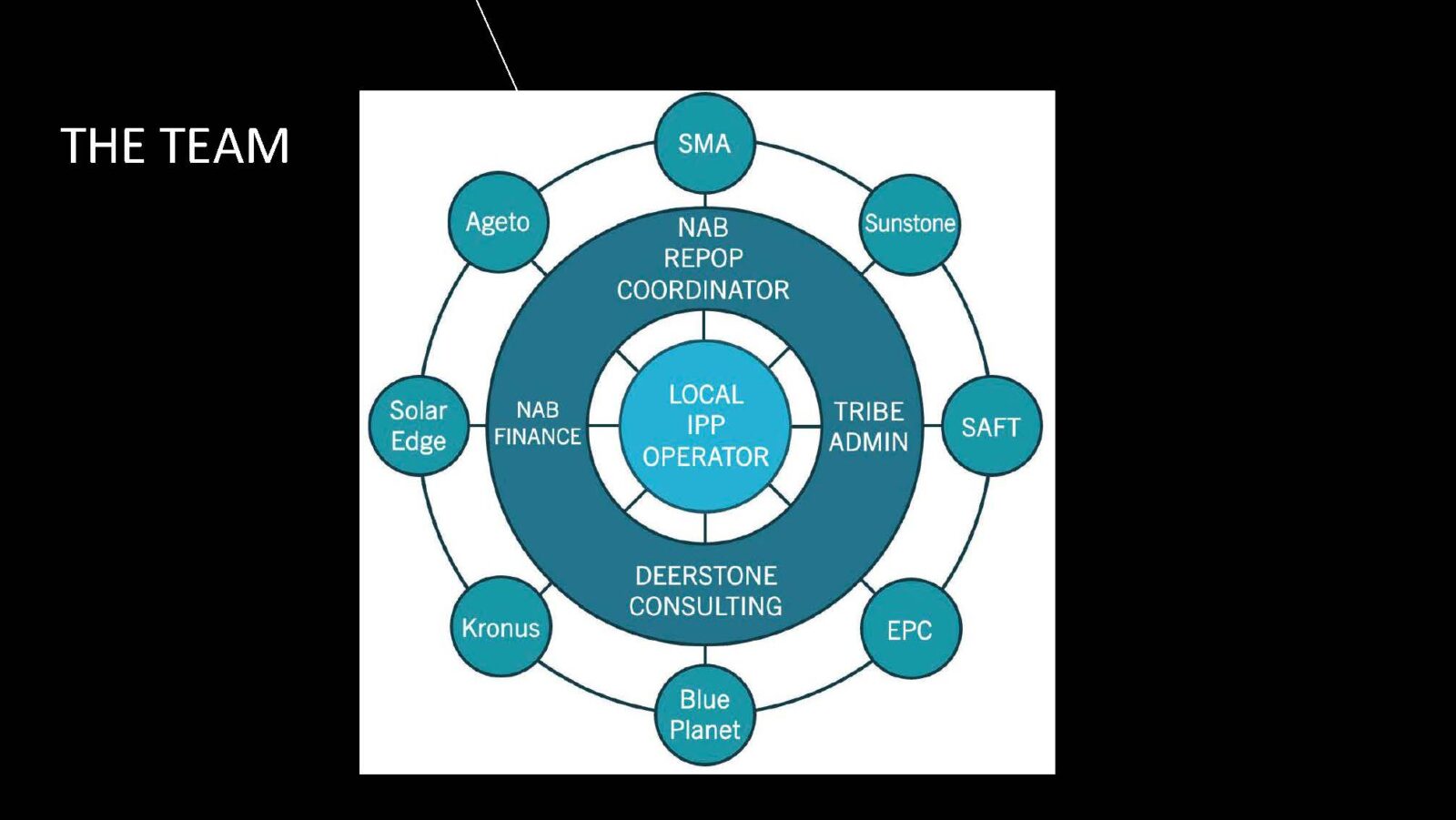
After presentations, participants chimed in with questions and observations. Responding to a question about any resources to help guide other communities in setting up a similar web of support, Modler noted that Deerstone and the Northwest Arctic Borough are collaborating to create an IPP handbook. This resource aims to balance locally or regionally specific details against broadly applicable information, with the goal of sharing it throughout the state.
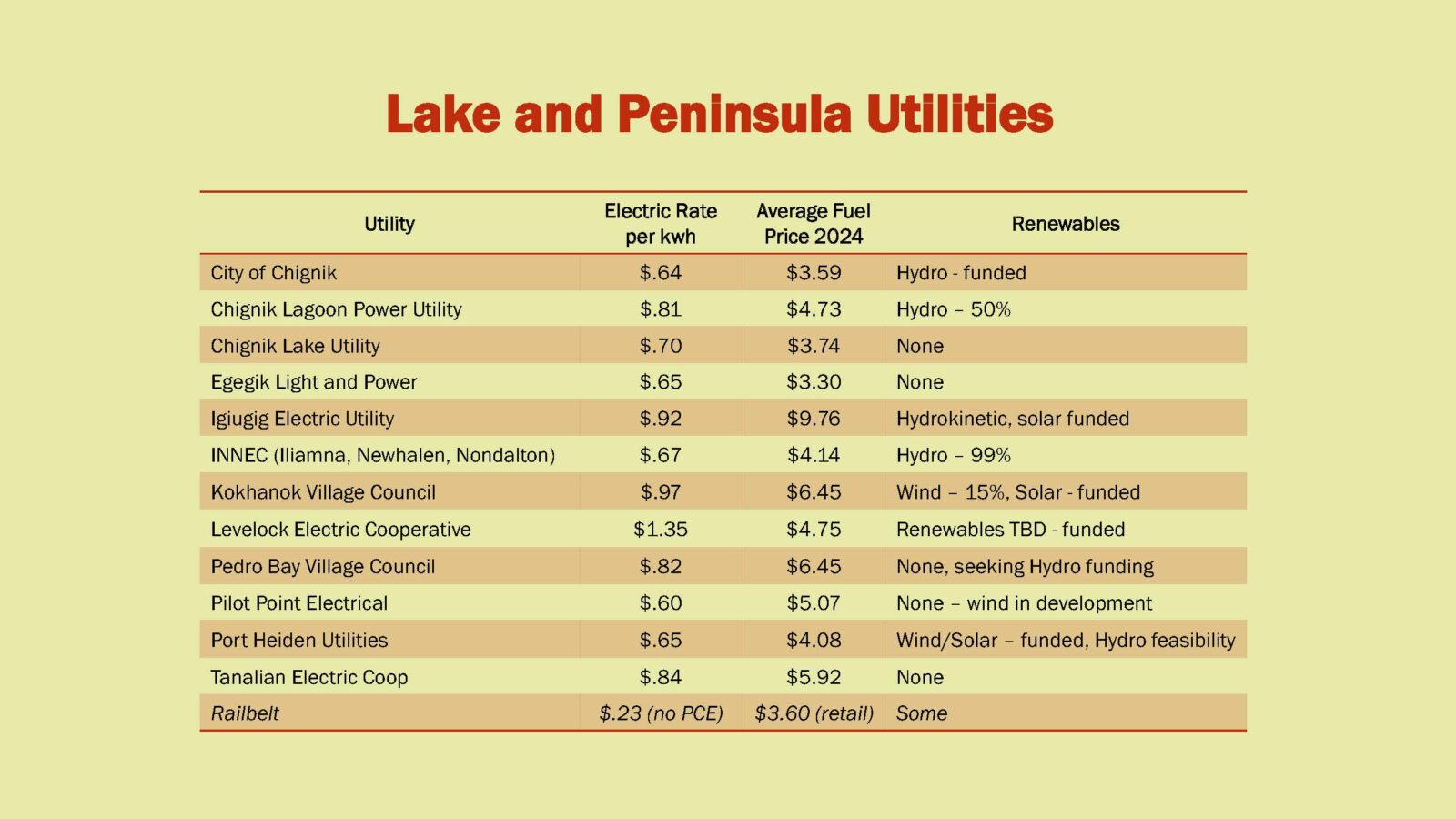
Hill recommended that other regions and communities start small and take a staged approach to their own regionalized utility assistance programs. The Lake and Peninsula Borough started with a granular study of five utilities, and now is building on that and studying an additional group of five utilities, in order to identify specific needs and priorities. “If we can build a system that works for our region, then we can grow and share. It’s not proprietary, it’s something the whole state faces,” stated Hill.
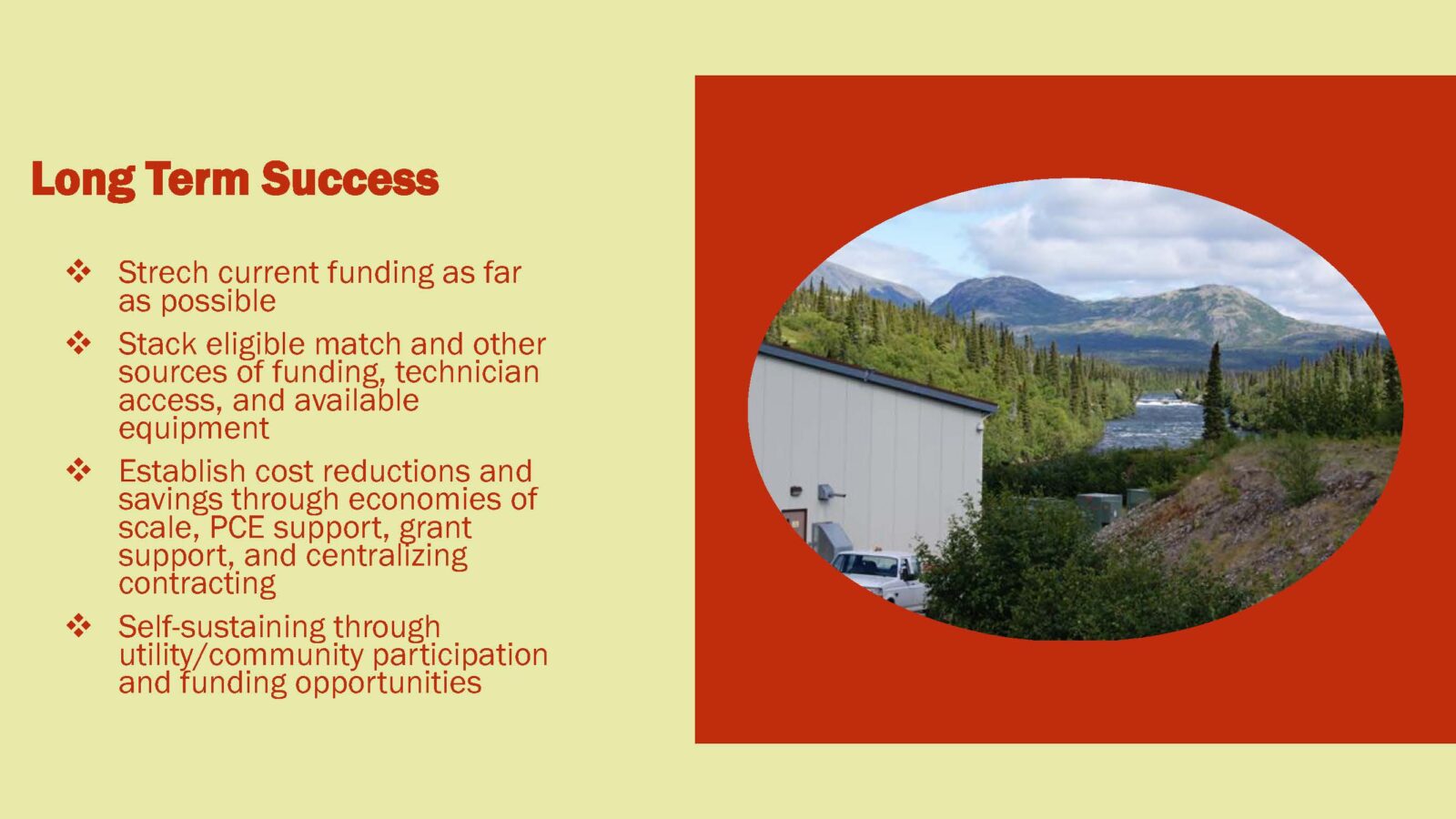
The final question centered on match funding and sustainability plans for each program. Kiley-Bergen shared that their current match funding is from the Denali Commission, Bristol Bay Native Corporation, and Alaska Venture Fund, with work ongoing to identify the final contribution. Some of the match funding requirements can be fulfilled by technical assistance, so the Borough’s earlier work to identify the highest-priority needs within five communities is part of their in-kind contribution to the match. The vast majority of funding is going toward projects, so that any non-federal projects can be complemented with 40101(d) funding, essentially cutting costs in half.
Hill added that, in the first few years, participating in the collaborative will be free for the Borough’s utilities. The Borough budgeted travel into the project to build trust and relationships over the next six years, and will collect data to document savings and kWh produced to make the case for continued regional support for the endeavor.
Modler noted that REPOP has been fully grant-funded, with some match funding, up until now. They are trying to create systems that can become smoother, more effective, and self-sustaining. IPP revenue is ultimately money that communities can choose how to spend, so they are similarly trying to track the benefits of REPOP in terms of kWh generated and cost savings to provide a compelling recommendation for investing in REPOP.
Hill concluded by stating the need to understand the heavy outmigration in rural communities. Providing economies of scale can create jobs in the region, rather than always sending money to mechanics in Anchorage. “Maybe the program can be one thing out of 10 that keeps the villages we live in operating into the future,” Hill stated. “The Borough has a career and technical education initiative shared across the region, and this is an important part of developing local skills. This isn’t an option, it’s a necessity.”