The question of how to develop the future of Alaska’s energy workforce was front and center at September’s Alaska Energy Training Group meeting, a quarterly virtual meetup for energy industry and workforce development professionals.

Jenny Starrs, REAP’s Program Manager for the Alaska Network for Energy Education and Employment, opened the meeting by addressing a challenge familiar to nearly every industry in Alaska: a shrinking local workforce. With more than a decade of net outmigration and the highest nonresident worker rate in 30 years, the state is at a crossroads. The message in the data is clear: Alaska can’t rely on importing workers. The state must invest in growing its own energy workforce. And apprenticeships, which blend classroom instruction with paid, on-the-job learning, are one of the most effective and time-tested tools for doing that.
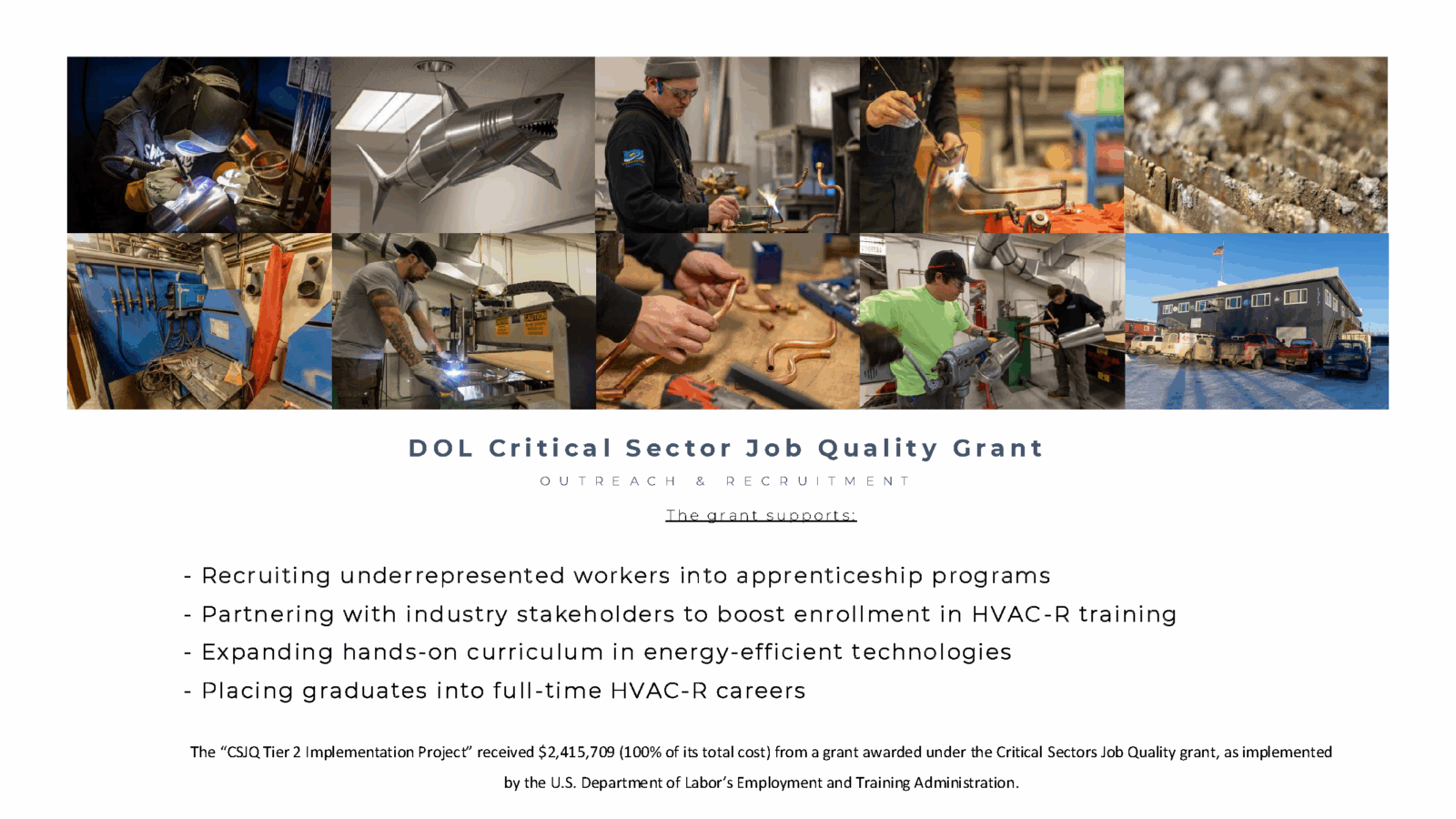
The goals of AMMA’s Critical Sector Job Quality Grant from DOL.

Bruce Bold, Apprenticeship Coordinator for the Alaska Metal and Mechanical Apprenticeship (AMMA), gave a presentation to the group about AMMA’s four-year programs in sheet metal and HVAC-R, trades essential to building efficiency and indoor air quality. Through a Department of Labor Critical Sector Job Quality Grant, the organization is expanding its reach far beyond Anchorage and the Matanuska-Susitna Borough. For the first time, AMMA has apprentices from Juneau, Sitka, and Ketchikan, including training the first-ever apprentice from Ketchikan and recruiting a pre-apprentice from Mt. Edgecumbe High School to work on a hospital project in Sitka. 

These milestones reflect a bigger shift: Apprenticeship opportunities are finally reaching rural and coastal communities that have often been left out of Alaska’s workforce development pipeline. Partnerships, targeted recruitment, and supportive wrap-around services are helping fuel and sustain this growth. AMMA is currently working with Bristol Bay Native Corporation, Cook Inlet Tribal Council, and other organizations to develop and pilot introductory HVAC-R classes that can be replicated across the state. 

Matthew Scott, Chief Operating Officer of OptimERA, shared how his electrical and telecommunications company is training electricians through an employer-sponsored registered apprenticeship based in Unalaska. OptimERA’s apprenticeships for inside and outside electricians and line workers are designed to fill service contracts with utilities throughout the Aleutian region. By keeping training in-house, OptimERA has streamlined onboarding, scheduling, and retention; key factors in an area where travel and logistics can make or break a program. Flexible rotational schedules and a modern distance learning platform have made it easier for apprentices to learn and stay engaged, even while working in remote communities.

The company boasts about 50% retention among graduates, a strong figure in Alaska’s labor landscape. Still, Scott acknowledged challenges: most local projects are contracted to Lower 48 companies, and clients often hesitate to want to include apprentices for smaller troubleshooting jobs. But OptimERA is countering that by paying above the typical starting apprentice wage, making their program more competitive and attractive to new recruits.

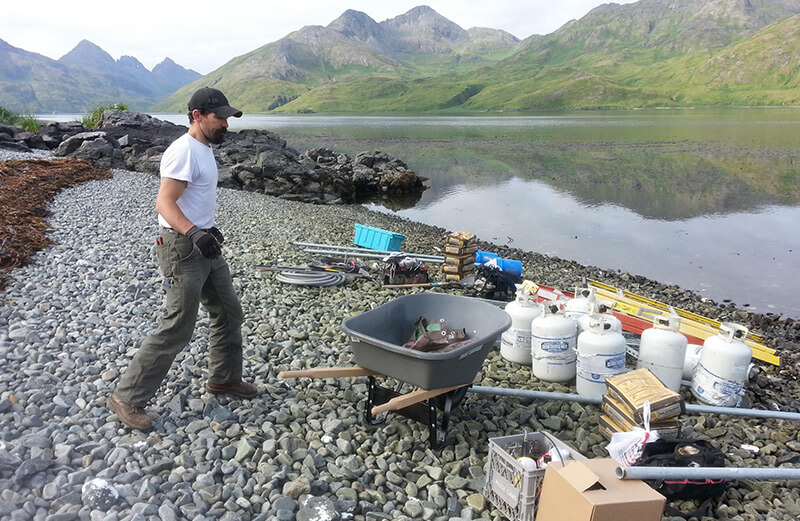
OptimERA’s crew working on a solar upgrade project in Sedanka Island.

And while apprenticeship programs are often best known for training traditional trades like electricians and HVAC technicians, they are also available to other professions that support the energy sector. Jacqueline Garcia, the State Director for the Department of Labor’s Alaska Apprenticeship Office, mentioned a few of the numerous apprenticeable occupations recognized nationally, like project management specialists and accounting technicians. She also shared the successes she’s seen with online instructional tools for apprentices’ required related technical instruction, which can help expand programs’ reach throughout the state.

To learn more about apprenticeship opportunities for Alaska’s energy sector or the Alaska Energy Training Group, reach out to Jenny Starrs at jstarrs@realaska.org.


By Olivia GarrettNovember 20th, 2025