Regional models for electric utility collaboration in rural Alaska

Staff at Alaska’s rural electric utilities work hard to keep their power on and communities running through difficult conditions 365 days a year. Keeping up with preventive maintenance and reporting requirements alone is often a huge task, much less integrating new renewable energy technologies into their systems. One strategy gaining momentum across the state is for regional partners and entities to step up and provide a range of supportive services to small utilities, making their work easier, more effective, and more affordable.

The Alaska Energy Training Group kicked off its first meeting of 2026 with presentations and discussion about two regionalized energy support efforts: the Renewable Energy Performance Optimization Program (REPOP) model in the Northwest Arctic Borough and the newly established Lake and Peninsula Borough Utility Collaborative (LPBUC). Both initiatives set out with the shared recognition that planning, building, and maintaining energy projects in Alaska’s rural communities could be more effective and efficient if they banded together to achieve economies of scale and more locally relevant support. But they have taken unique paths to establish structures and staff to provide additional support to utilities in their region.

On March 3, 2026, the Alaska Energy Training Group gathered for presentations and discussions about regionalized energy support services, models, and benefits. Key advice shared included the importance of having an accessible contact to manage assistance, issues, and communication between manufacturers, agencies, and operators, and the need to build trust and buy-in among local participants for long-term sustainability.

Renewable Energy Performance Optimization in the Northwest Arctic Borough

Kate Modler, a project manager with DeerStone Consulting, began by describing REPOP. The program supports Tribes in the Northwest Arctic Borough who are setting up solar independent power producers (IPPs). REPOP helps monitor performance, assist local operators, and provide ongoing training and support.

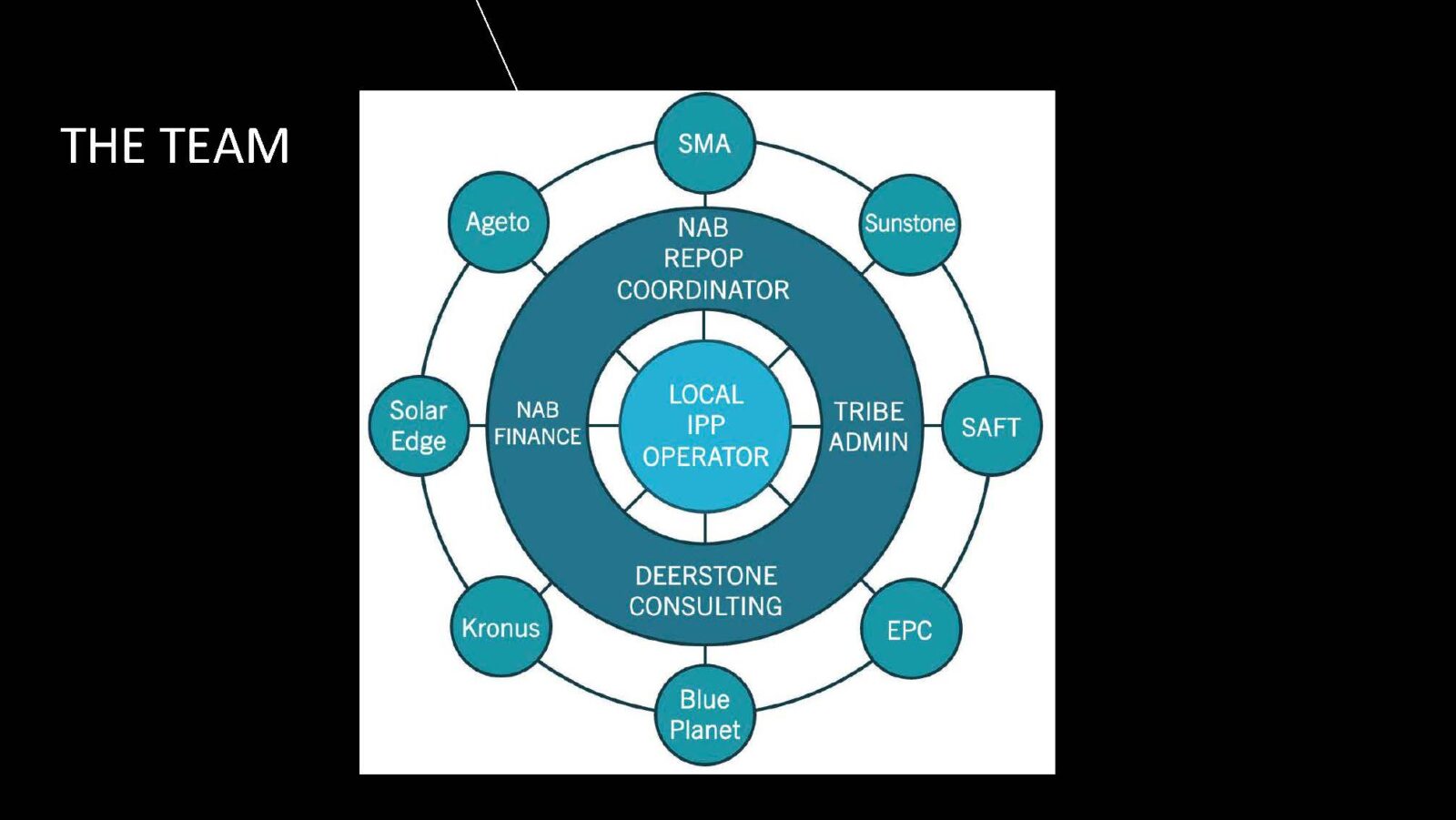
The “REPOP web of support”—illustrated in Modler’s presentation—has the local community operator in the center. That operator is primarily supported by the Borough’s REPOP Coordinator, Shauntai Shroyer; DeerStone Consulting; the Borough’s finance team; and the Tribal administration in the second tier. That support tier is followed by technology manufacturers and contractors that provide specialized assistance in the outer ring. This web highlights the many partners and layers that rural utilities need for successful operations, and the reason why coordination and shared support services are so vital.

The “REPOP web” in Modler’s presentation shows the multiple tiers of support needed to maintain and optimize rural energy infrastructure.

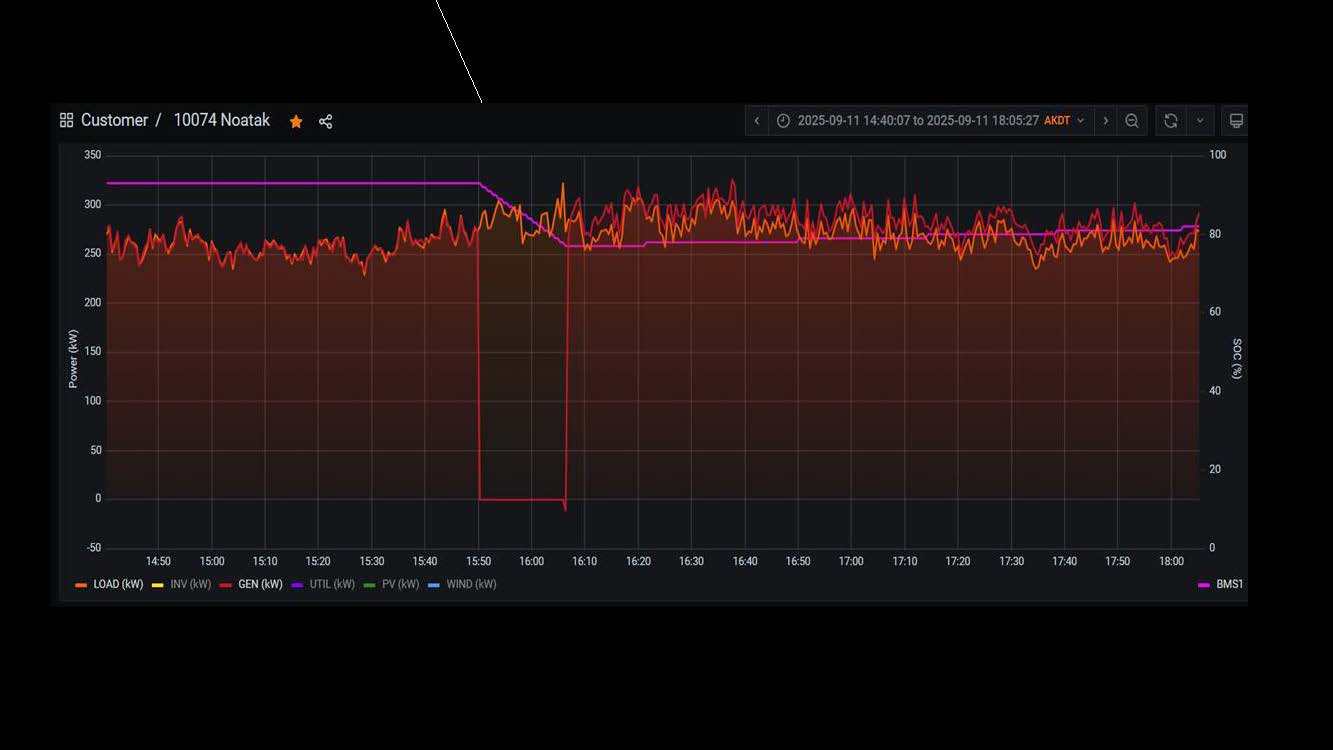
This image shows Noatak’s energy supply during the outage. The red line depicts the diesel generator’s output, while the pink shows the battery energy storage system.

Modler also discussed solar generation and operations trends from two communities, Shungnak and Noatak. She shared that Noatak’s solar site transformers are currently being used by a temporary power plant—not generating solar power, but instead serving a broader need amid erosion and climate change. 

The communities supported by REPOP also have access to real-time system data to help optimize operations and document the impact of solar-battery energy storage systems on rural energy reliability and cost. For example, Modler shared data from an instance where Noatak’s diesel generator unexpectedly went offline and their battery energy storage system instantaneously kicked in to prevent an outage. That gave Modler and the local operator time to get the generator back online without the community losing power.

The Tribal IPPs in the Borough are already generating revenue, with planning underway to determine how to direct those funds in the future. When analyzing expenses across REPOP communities, nearly 50% of each system’s lifetime expenses are dedicated to maintenance costs. The remaining expenditures were split among insurance, battery-building station service, and IPP operator wages.

Lake and Peninsula Borough’s Emerging Utility Collaborative

Natalie Kiley-Bergen, the Lake and Peninsula Borough’s Utility Collaborative Manager, and Nathan Hill, the Lake and Peninsula Borough Manager, presented next on their efforts to form a regional collaborative for the 13 electric utilities serving the Borough’s 16 communities. The effort dates back more than a decade, and is getting underway this year thanks to funding provided by the DOE Grid Resilience 40101(d) consortium; support provided by consortium partners Denali Commission, Bristol Bay Native Corporation, Alaska Venture Fund, DeerStone Consulting, and Iguigig Village Council; and a BIA Tribal Energy Development Capacity grant.

The Borough’s role is to provide administrative and project management support for the collaborative, with the goals of:

  • Improving reliability;
  • Lowering operational and fuel costs;
  • Minimizing emergency repairs;
  • Facilitating renewable integration; and
  • Supporting system longevity through shared service contracts, PCE reporting support, and data management assistance.

They hope to foster relationships with and between utilities, providing a reliable point of contact and a network of support.

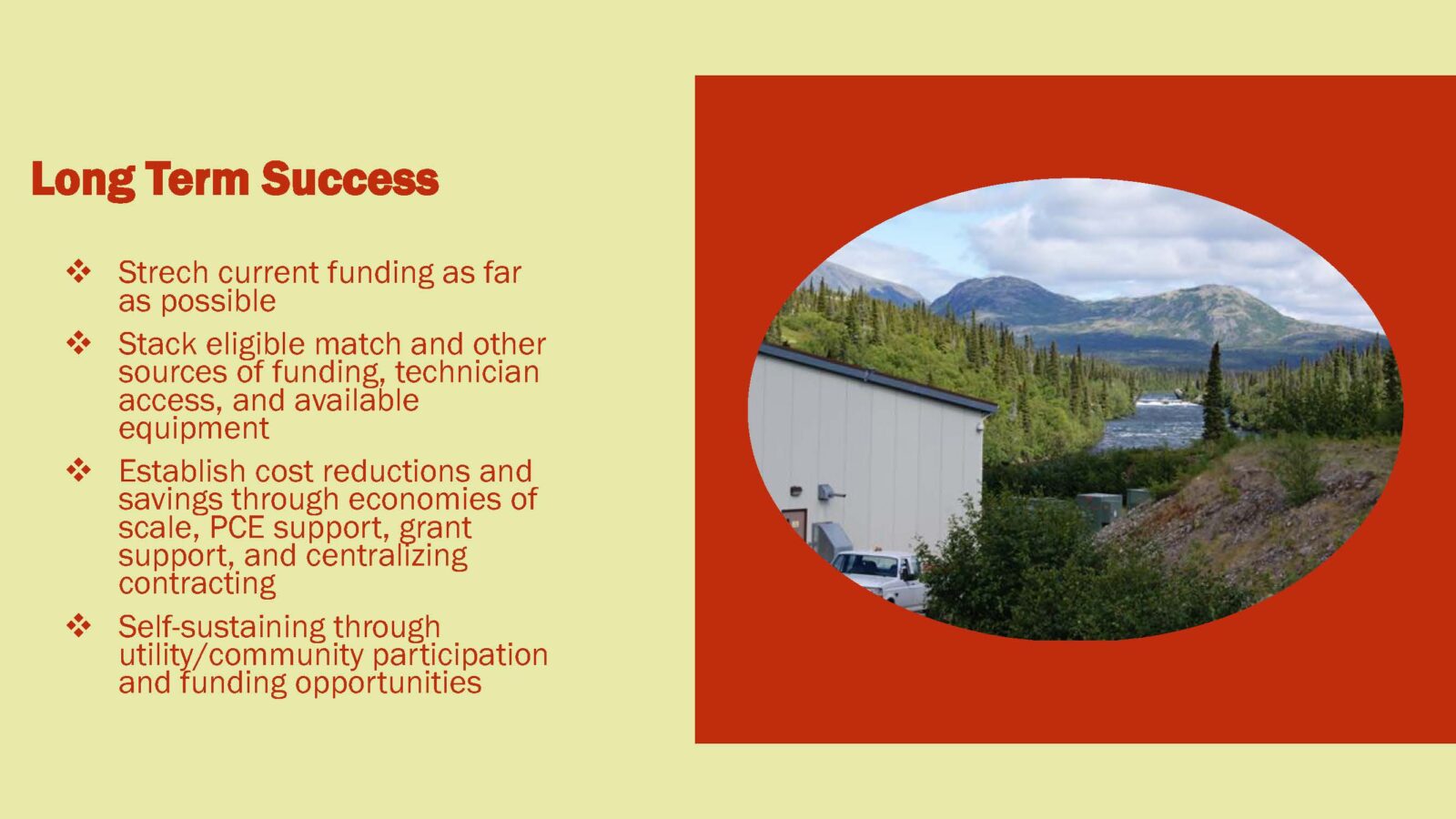
By working together, this consortium plans to develop projects that improve community and regional resilience and achieve economies of scale. Eligible projects include microgrid integration and battery storage, generator upgrades (but not new construction), resilience projects, fuel storage upgrades, utility workforce training and maintenance contracts, and building management or SCADA enhancements. The funding extends through 2032, giving the collaborative runway to manage projects and deliver value to the Borough’s utilities. Their eventual goal is to become self-sustaining through utility participation and new funding opportunities, with high hopes for maximizing their impact with best practices and contractor recommendations from around the state.

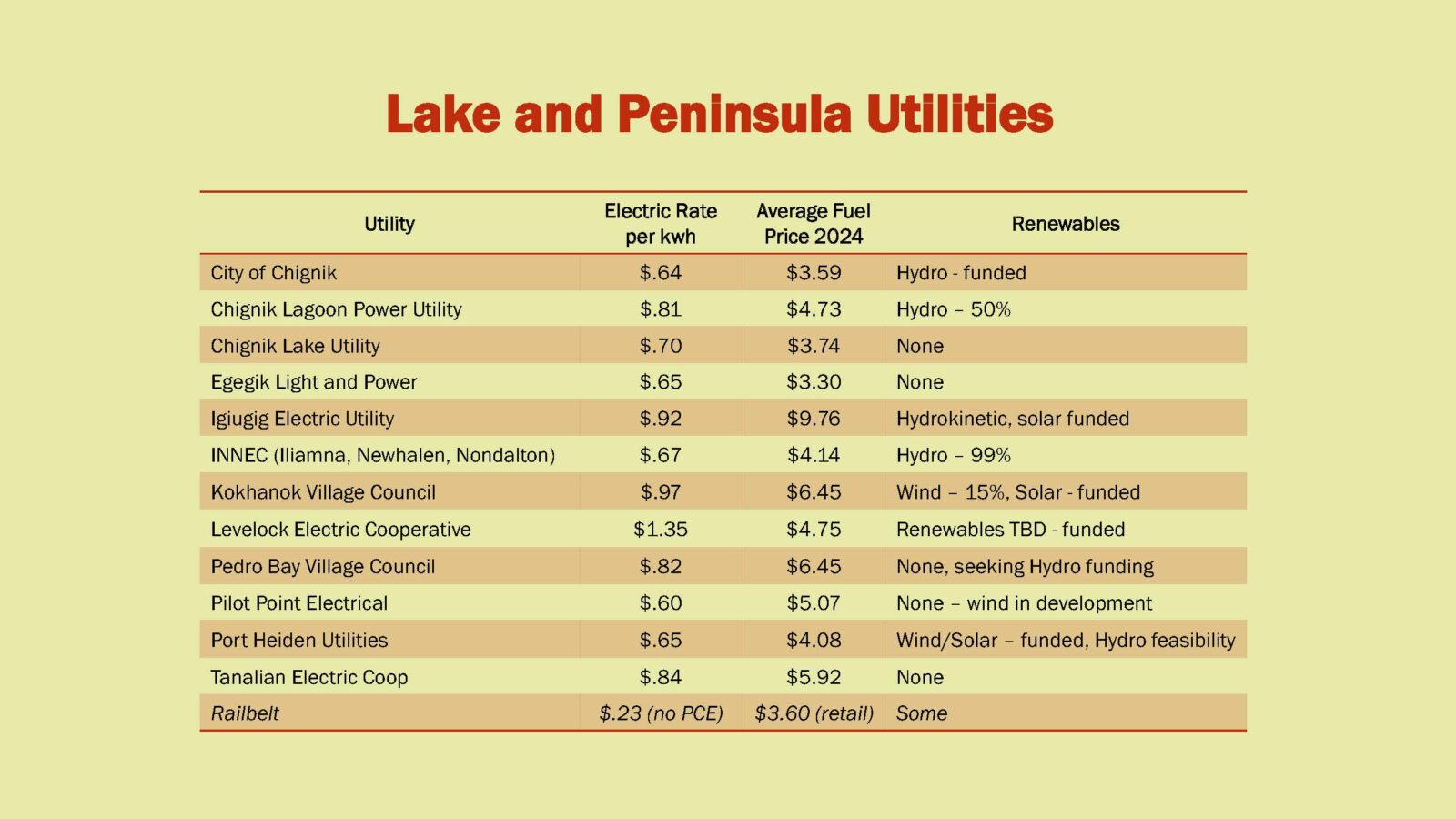
Kiley-Bergen and Hill shared information about energy prices in the Lake and Peninsula Borough during their presentation, which range from $0.60 to $1.34 per kWh and $3.30 to $9.76 per gallon.

The Borough’s long-term goal is to sustain the collaborative beyond its first infusion of 40101(d) funding.

After presentations, participants chimed in with questions and observations. Responding to a question about any resources to help guide other communities in setting up a similar web of support, Modler noted that Deerstone and the Northwest Arctic Borough are collaborating to create an IPP handbook. This resource aims to balance locally or regionally specific details against broadly applicable information, with the goal of sharing it throughout the state.

Hill recommended that other regions and communities start small and take a staged approach to their own regionalized utility assistance programs. The Lake and Peninsula Borough started with a granular study of five utilities, and now is building on that and studying an additional group of five utilities, in order to identify specific needs and priorities. “If we can build a system that works for our region, then we can grow and share. It’s not proprietary, it’s something the whole state faces,” stated Hill.

The final question centered on match funding and sustainability plans for each program. Kiley-Bergen shared that their current match funding is from the Denali Commission, Bristol Bay Native Corporation, and Alaska Venture Fund, with work ongoing to identify the final contribution. Some of the match funding requirements can be fulfilled by technical assistance, so the Borough’s earlier work to identify the highest-priority needs within five communities is part of their in-kind contribution to the match. The vast majority of funding is going toward projects, so that any non-federal projects can be complemented with 40101(d) funding, essentially cutting costs in half. 

Hill added that, in the first few years, participating in the collaborative will be free for the Borough’s utilities. The Borough budgeted travel into the project to build trust and relationships over the next six years, and will collect data to document savings and kWh produced to make the case for continued regional support for the endeavor.

Modler noted that REPOP has been fully grant-funded, with some match funding, up until now. They are trying to create systems that can become smoother, more effective, and self-sustaining. IPP revenue is ultimately money that communities can choose how to spend, so they are similarly trying to track the benefits of REPOP in terms of kWh generated and cost savings to provide a compelling recommendation for investing in REPOP.

Hill concluded by stating the need to understand the heavy outmigration in rural communities. Providing economies of scale can create jobs in the region, rather than always sending money to mechanics in Anchorage. “Maybe the program can be one thing out of 10 that keeps the villages we live in operating into the future,” Hill stated. “The Borough has a career and technical education initiative shared across the region, and this is an important part of developing local skills. This isn’t an option, it’s a necessity.”
The Alaska Energy Training Group is a quarterly meetup for energy professionals facilitated by REAP’s Alaska Network for Energy Education and Employment in partnership with the Denali Commission. The group’s mission is to improve coordination and collaboration in training, troubleshooting, workforce development, and technical assistance programs and investments throughout Alaska. If you want to participate in future conversations about energy training in the state, sign up for the Alaska Energy Training Group for meeting and training updates, or email jstarrs@realaska.org.