Truly understanding the importance of energy in our lives doesn’t just happen overnight. That’s why REAP was thrilled to build on its partnership with Kusilvak Career Academy to deliver two weeks-long clean energy courses for their students in 2025.
The REAP – KCA Partnership
Last year, REAP staff led 50 students through two 6-week clean energy courses at Kusilvak Career Academy (KCA). As the Lower Yukon School District’s (LYSD) career and technical high school in Anchorage, KCA houses and teaches high schoolers from 10 communities in the Yukon–Kuskokwim Delta about career readiness and life-skills, all while helping them complete their required high school credits. REAP’s courses helped all 50 students earn high school science credits and supported 31 of those students in earning one college credit that can be used towards UAF Bristol Bay Campus’s Sustainable Energy Occupational Endorsement Certificate.
Community Experts
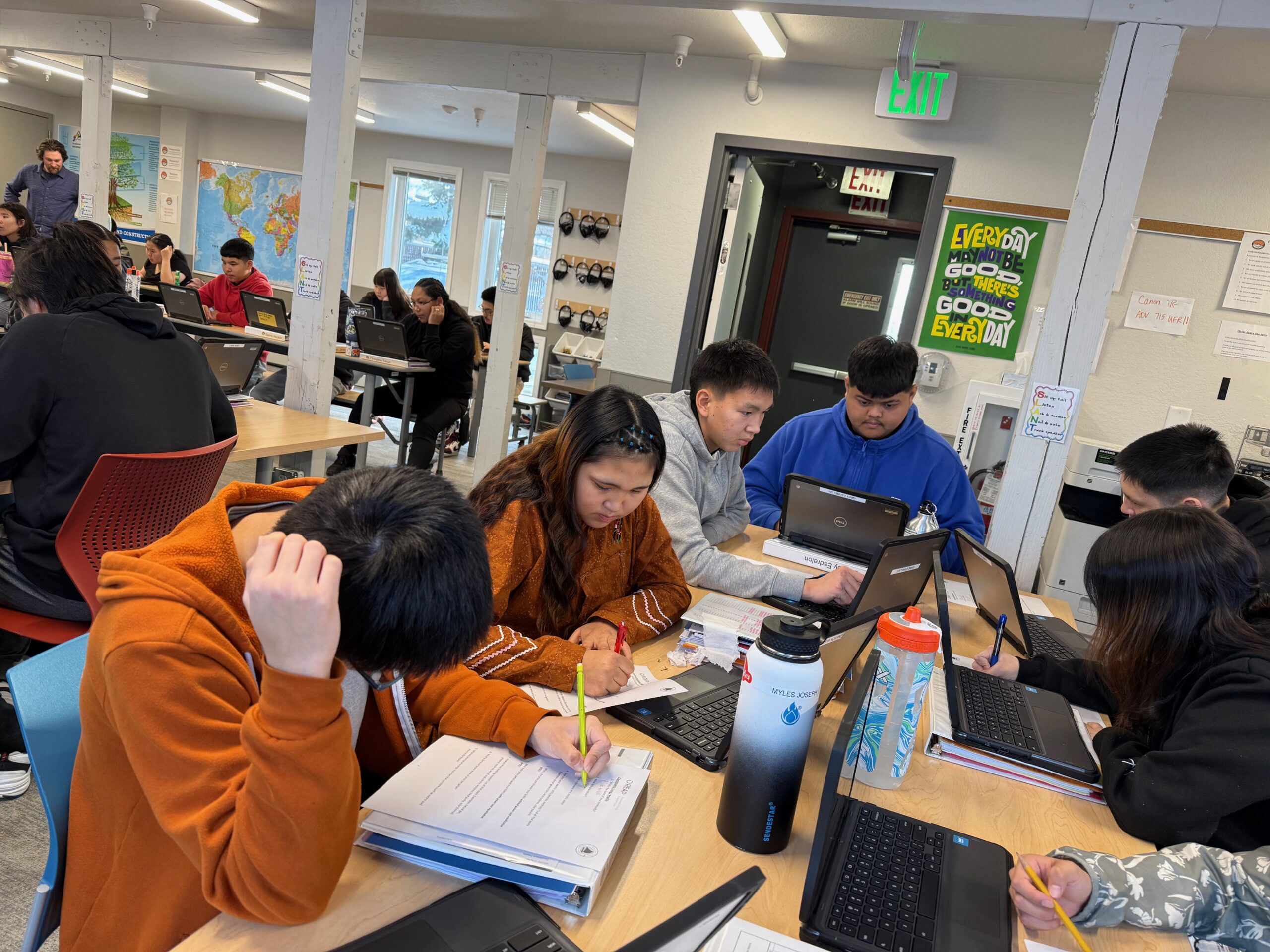
Through the courses, Intro to Sustainable Energy and Home Energy Basics, students learned about home energy systems, energy efficiency, weatherization techniques, microgrids, clean energy policy, renewable technologies, and clean energy careers. Once students had a good grasp on these technologies and concepts they began applying them to their home communities.
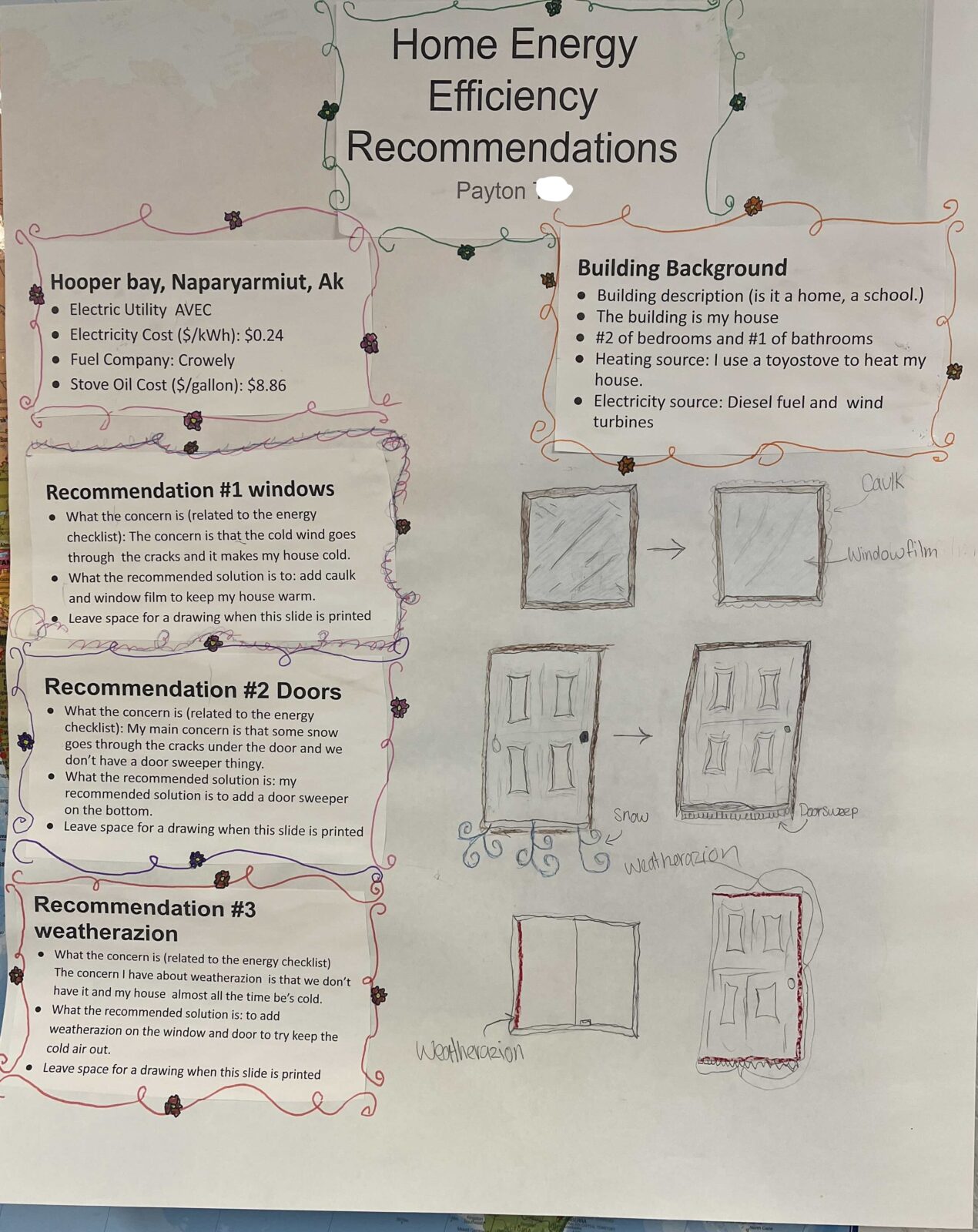
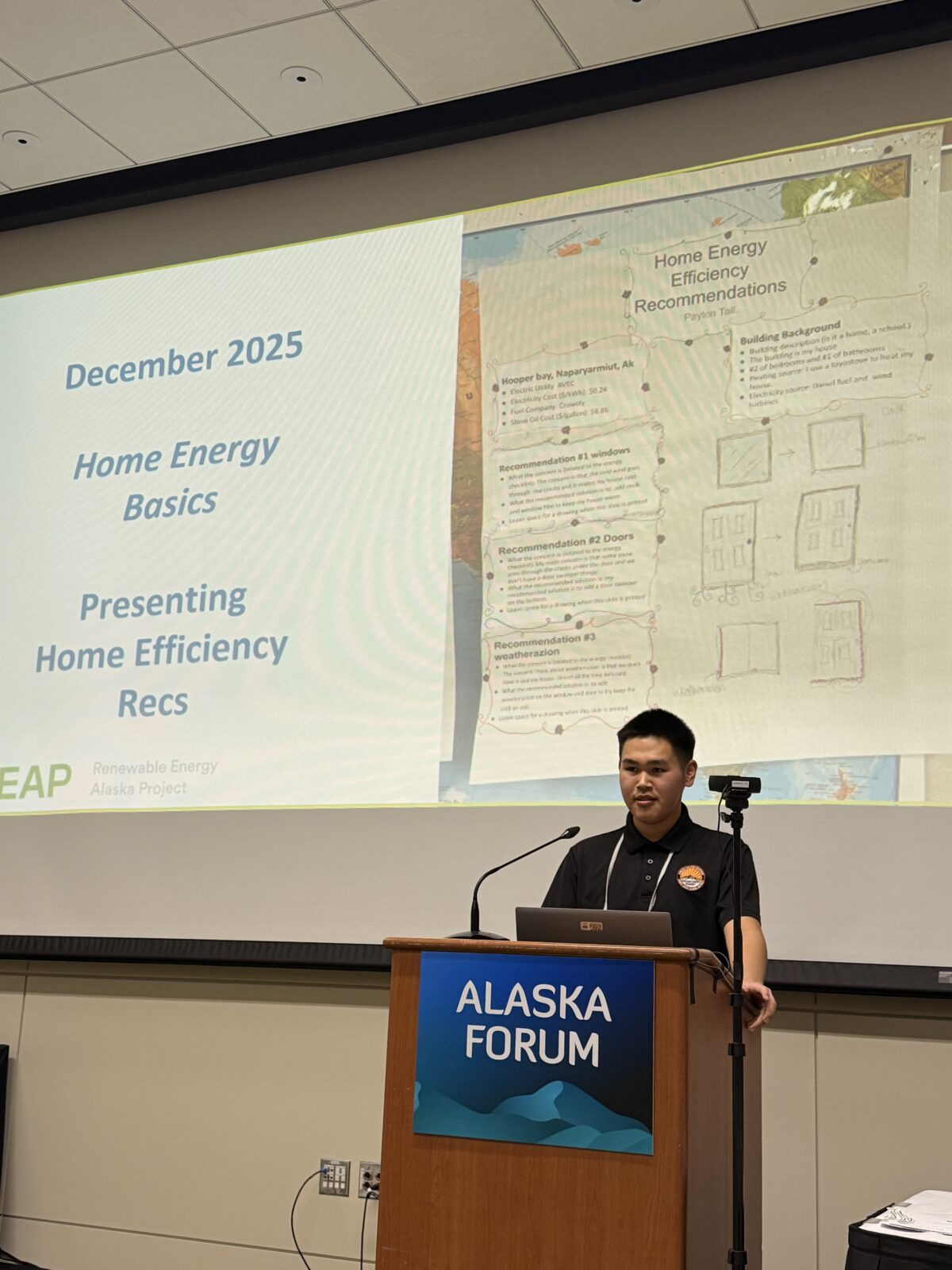
Students in each course completed their own “Community Energy Story” in which they gathered with peers from their communities and completed a research project detailing the energy systems, prices, and opportunities back home. Each group then prepared a presentation slide that they presented to the class and the instructors.
Entering the courses, only 22% of students knew electricity in their communities came mainly from diesel fuel. The realization that all their communities relied heavily, in some communities solely, on diesel fuel was very powerful. This set the stage for the rest of the lessons to focus on how to use less heat and electricity in their homes through energy conservation, efficiency, and weatherization practices and what clean energy alternatives exist to further displace diesel fuel.
Using pre and post assessments, REAP also measured other knowledge gains. At the beginning of the courses only 34% of students knew who their local electric utility was. This increased to 76% by the end of the course. Also, at the beginning of Home Energy Basics, 55% of students could list at least one way to reduce energy use around their home. By the end of the course 86% of students could describe at least one energy saving action.
Experiential Learning
While attending KCA, students have opportunities to use driving and flight simulators, sew, knit, and bead traditional garments, 3D print, prepare traditional foods, and attend first responder, welding, and culinary arts classes at King Tech High School.
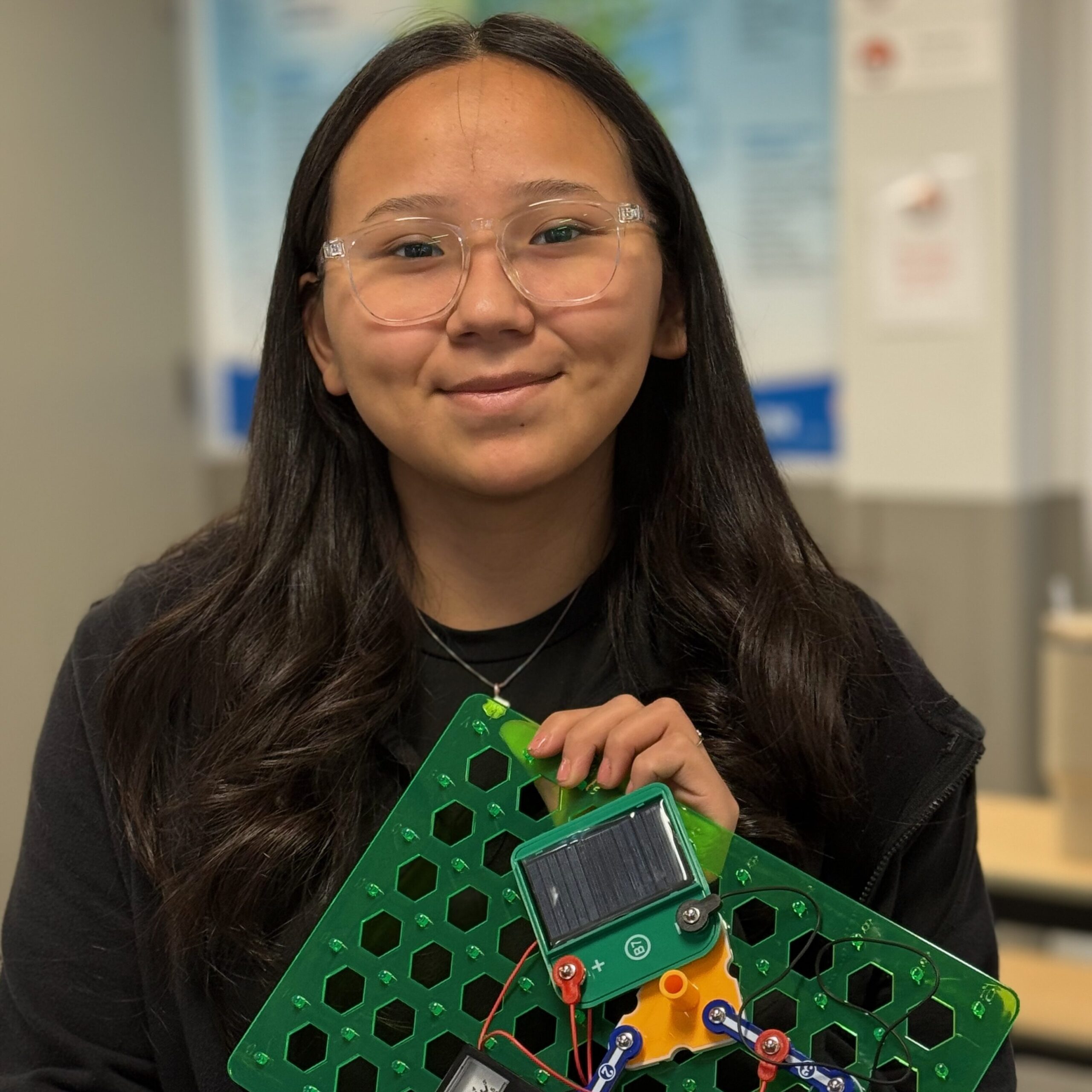
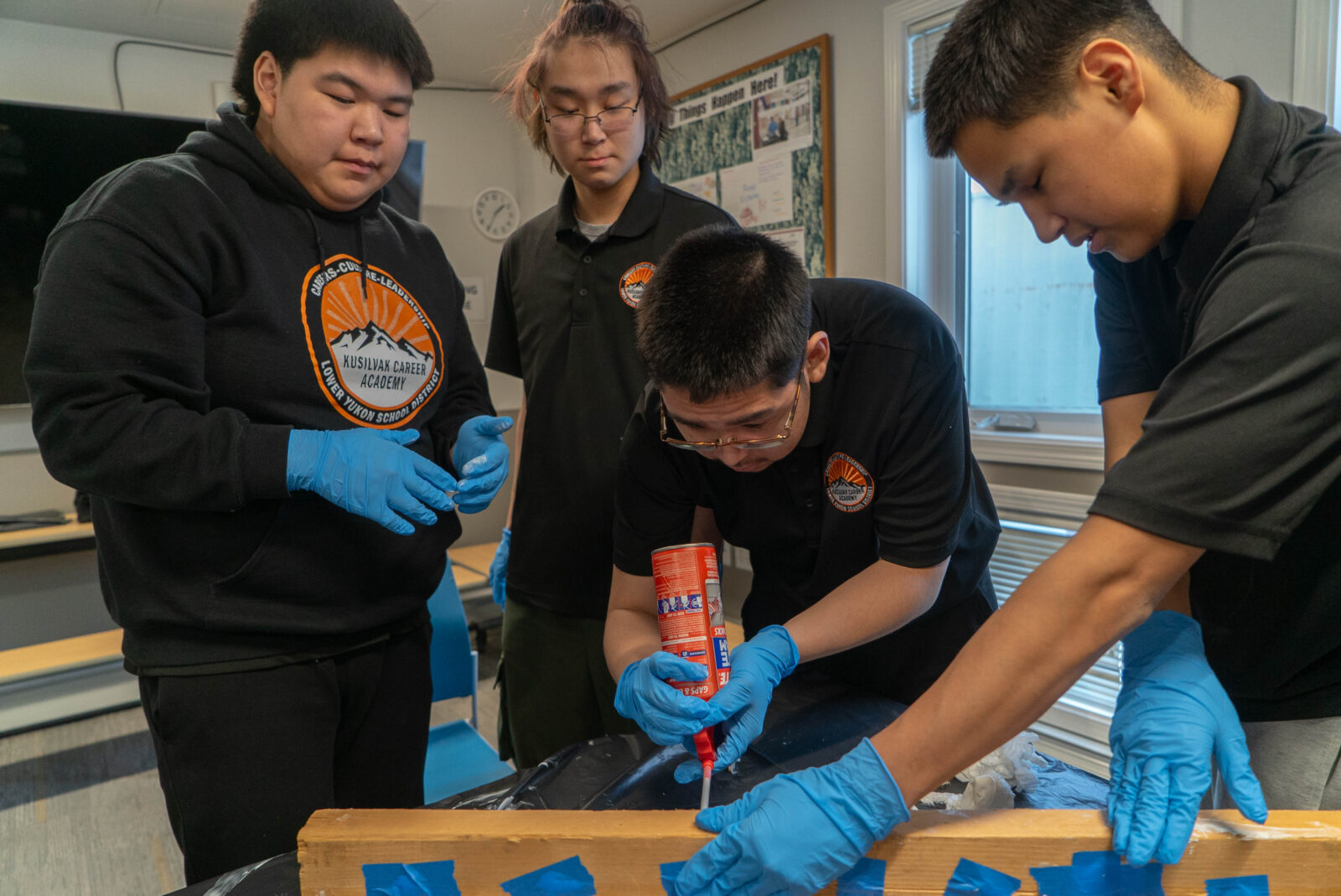
REAP educators strived to make our clean energy classes just as engaging. All 42 classroom sessions across the two courses included at least 30 minutes of hands-on activities and labs. Students used real solar photovoltaic panels to measure power output under different environmental conditions; practiced air sealing skills using caulk, expanding spray foam, and window insulation kits; engineered model wind turbines capable of producing power; measured electricity draw of appliance; built model microgrids using snap circuits; and much more. The original content for the classes was developed by UAF Bristol Bay Campus, and REAP modified by adding these activities, many of which were from the free AK EnergySmart curriculum. REAP developed AK EnergySmart in partnership with the Alaska Housing Finance Corporation, which champions residential energy efficiency statewide. At the end of both courses, all the students took home a box of caulk, spray foam, window insulation kits, light timers, and LED lightbulbs to demonstrate their new skills back home and help their families reduce their energy use and expenses.
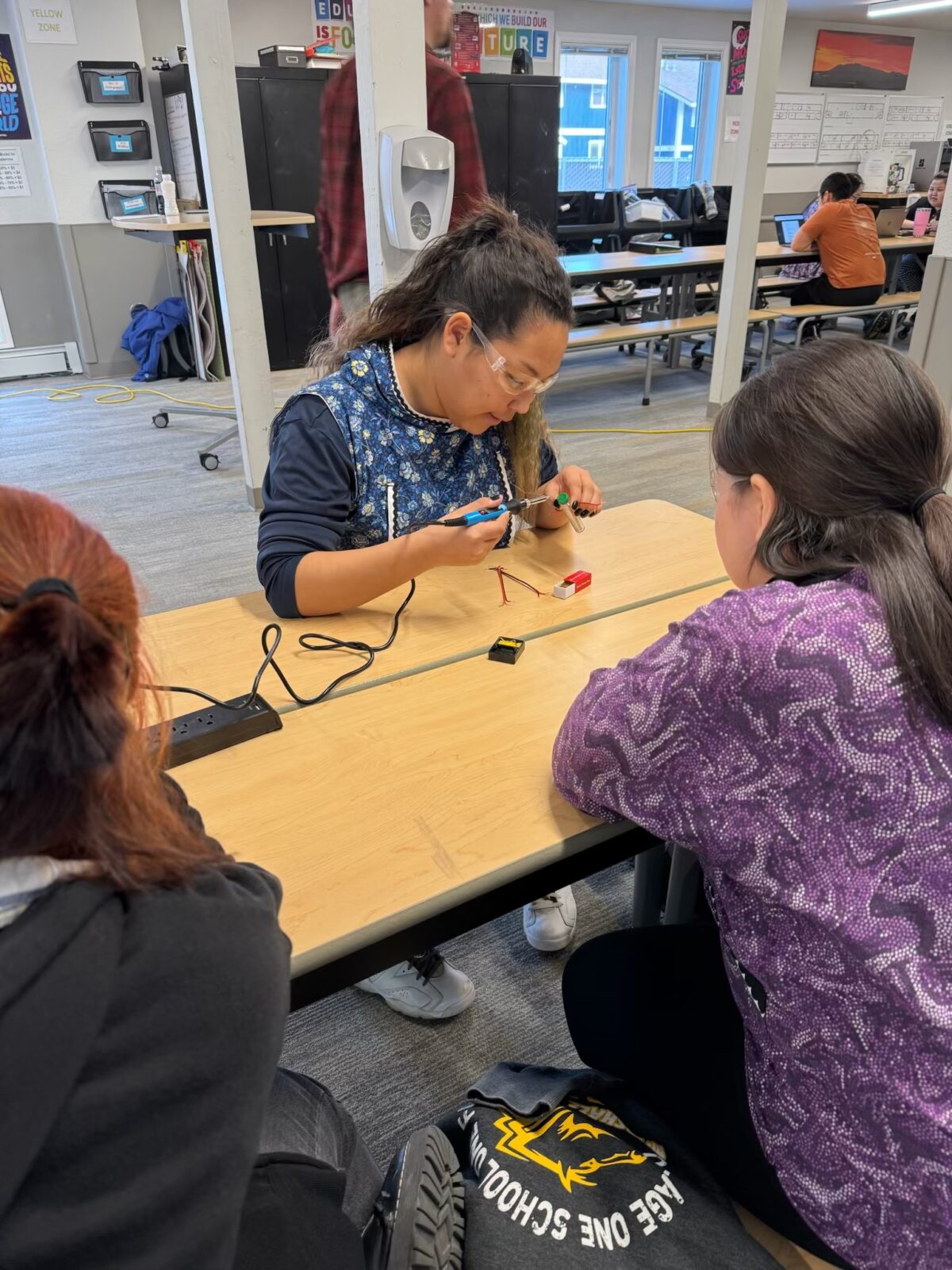
One of the projects the students in Intro to Sustainable Energy completed was a solar nano-grid that could recharge AA batteries and directly charge devices using a USB-C port. The project, adapted from a Teaching Through Technology (T3) lesson, taught students how to connect a solar panel and various loads to a charge controller that would allow them to switch the pathway of the electrons between the rechargeable battery port and the USB-C, a necessary attribute for any off-grid solar project. Over four class periods students stripped, tinned, and soldered all the wires in their nano-grid and took their projects home with them.
Touring UAA’s Heat Pump Lab
Students in the Home Energy Basics course also toured the UAA College of Engineering’s LG Cold Climate Heat Pump Lab on UAA’s main campus. The heat pump lab is built to resemble a modest two-bedroom, one-bathroom modular home. But this home is outfitted with three air source heat pumps, a heat pump washer and dryer, and a heat pump water heater. Researchers at the lab gave students a quick heat pump presentation and then showed us the technologies being demonstrated in the lab. Students were also introduced to programs incentivizing the installation of heat pumps in rural communities. After the tour, students returned to the school where they completed a heat pump science lab, using mini-vacuum bell jar kits to observe the effects of pressure changes on several items like marshmallows, balloons, and vials of warm water. By the end of the lab, students caused 150˚F water to boil by depressurizing the bell jar, emulating the phase change that occurs between the outdoor and indoor unit in an air-source heat pump.
Conference Season
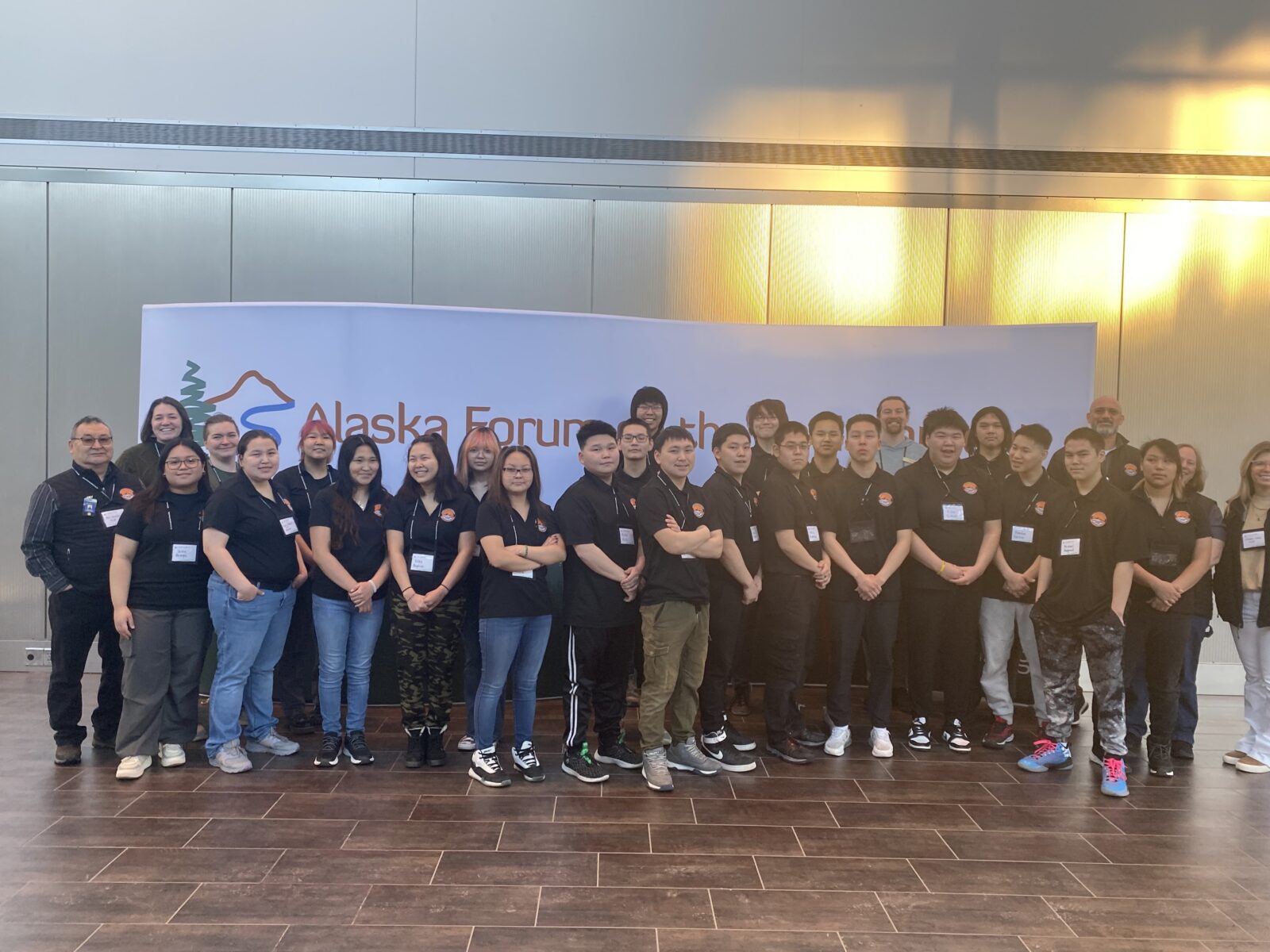
During the Intro to Sustainable Energy Course in February and March of 2025, students attended the Alaska Forum and sat in on multiple panels and presentations. The opportunity let students engage with the research, advocacy, and discourse surrounding environmental issues happening in Alaska. Students asked questions of presenters and panelists, chatted with industry professionals tabling for their organizations, and observed the leadership of their elders from their region during the luncheon. This experience helped model exceptional public speaking skills and compelled students to practice professional communication.
Charlie Coffee, a junior from Marshall, was one of the students who participated in the Home Energy Basics class in November and December 2025 and is continuing his learning at KCA this session. Charlie and KCA students attended the Alaska Forum earlier this month, gaining the same experiences as the students last year. This year, however, was special as Charlie shared his experiences in the class on a panel at the event with REAP’s Education Director Colleen Fisk and KCA science teacher Emily Poole. “I used the materials that REAP gave us at home,” Charlie shared, “and my sister told me our electricity and heating bills were 25% lower.” Multiple Western Alaska community members in the audience praised the students for their learning and leadership.
From Learning to Action
The final project for students in the Intro to Sustainable Energy course was an activity called “Energy Perspectives.” Students were assigned roles in a fictitious community facing energy challenges. After learning about the benefits and barriers of different renewable technologies and energy efficiency measures during the class, they met in a mock town hall meeting to discuss their options and vote on which direction their community should take, all while staying true to their assigned community role. This activity in particular aimed to empower students to be more comfortable engaging in energy decisions and conversations happening in their home villages.
One of the difficulties that was discussed with students in these classes and the Energy Perspectives activity was the need for more people who can work in the energy jobs across Alaska. Next session, from the end of March to beginning of May, REAP’s ANEEE Director, Jenny Starrs, will be leading a class on exploring clean energy careers in Alaska, repeating the “Powering Your Future” class from two years ago. The class will incorporate guest speakers and field trips to different facilities in town, like the Southcentral power station owned by Chugach Electric and the metal workers training center.
We hope to see students continuing to apply their learning at home, perhaps joining the energy workforce, or even becoming clean energy champions in their communities.
With REAP’s support, students returned to their villages equipped with the knowledge and materials needed to weatherize their family homes. Families were deeply appreciative of the immediate impact. Beyond the economic benefit, families expressed pride in seeing their children apply newly acquired skills to meet real household needs. REAP’s investment not only supported hands-on learning but also empowered students to contribute meaningfully to their homes and communities during one of the most challenging seasons of the year.
Kudos
REAP programs at KCA wouldn’t be possible without the wonderful students, staff, and leadership at Kusilvak Career Academy and the Lower Yukon School School District and the engaging guest speakers who volunteered their time to meet with the students. REAP also received support from the Alaska Housing Finance Corporation, Alaska Community Foundation, and the Office of Naval Research to provide materials, curriculum, and instructor time to support this initiative. Thank you also to Alaska Resource Education for allowing us to take students away from your time with them for some of our trips.
Thank you to UAF Bristol Bay Campus for covering the cost of the students’ tuition and to the Alaska Forum for allowing KCA students to attend at no charge for four years in a row now!